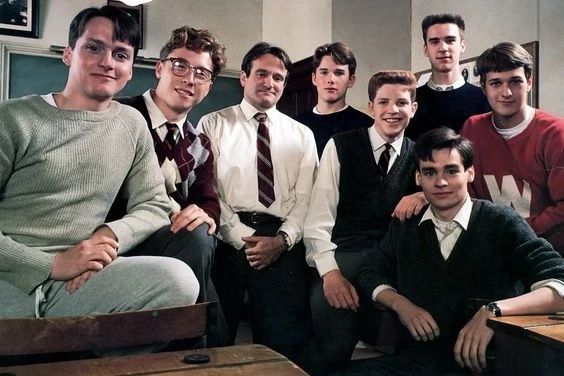
Safia HAOUAR |A movie about freedom of mind, critical mind and resistance, Dead Poets Society, a film directed by Peter Weir in 1989 asks a question : what life do you want to live ? Peter Weir presents the journey of different students looking for their own dreams, and finding parents, school and some teachers to be an obstacle to their minds. However, the fight may not be outside but inside, and Dead Poets Society overall portrays M. Keating, their new teacher, as pushing them to engage in the battle of freedom within themselves.
Do you believe words and ideas can change the world? Some would still say yes, while others would answer, more seriously, no. Mr. Keating, however, not only believes in their power but also teaches it in the film Dead Poets Society, directed by Peter Weir in 1989. We follow the story of teenage students at a prestigious and conservative prep school who meet their new literature teacher, Mr. Keating. Through poetry, art, and love, they will learn what they want to do with their lives. However, to achieve this, they will have to think for themselves and learn to question the people and ideas they have never dared to challenge before.
Shush your freedom is too loud
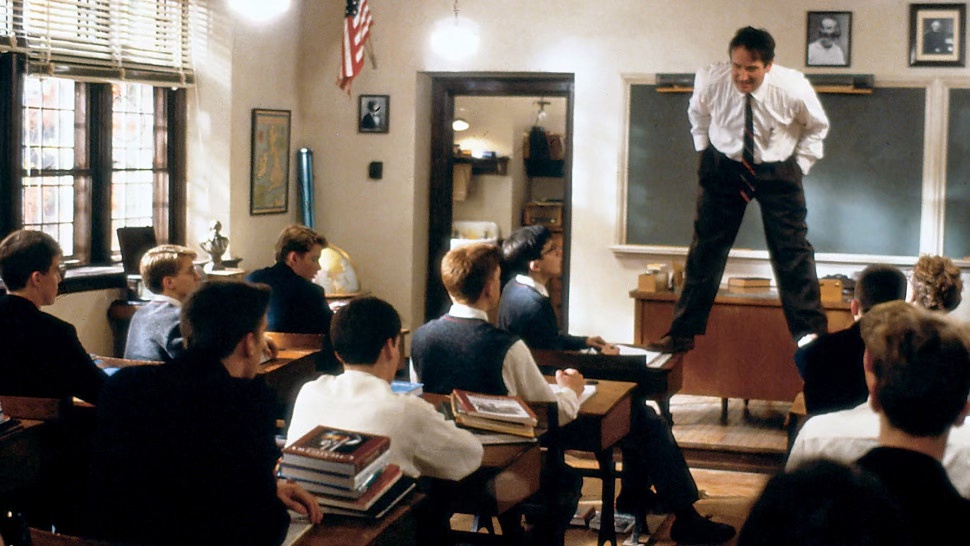
The biggest antagonist of freedom in the movie is represented by the prep school itself. Visually, the school does not feel welcoming: the hallways are cold and dark, and the classrooms are decorated in sober colours. We see traditional architecture, including huge buildings and very high ceilings. The camera intensifies this imposing mood and uses wide shots to show the students standing in well-organised rows, emphasising the oppressive atmosphere of the institution.
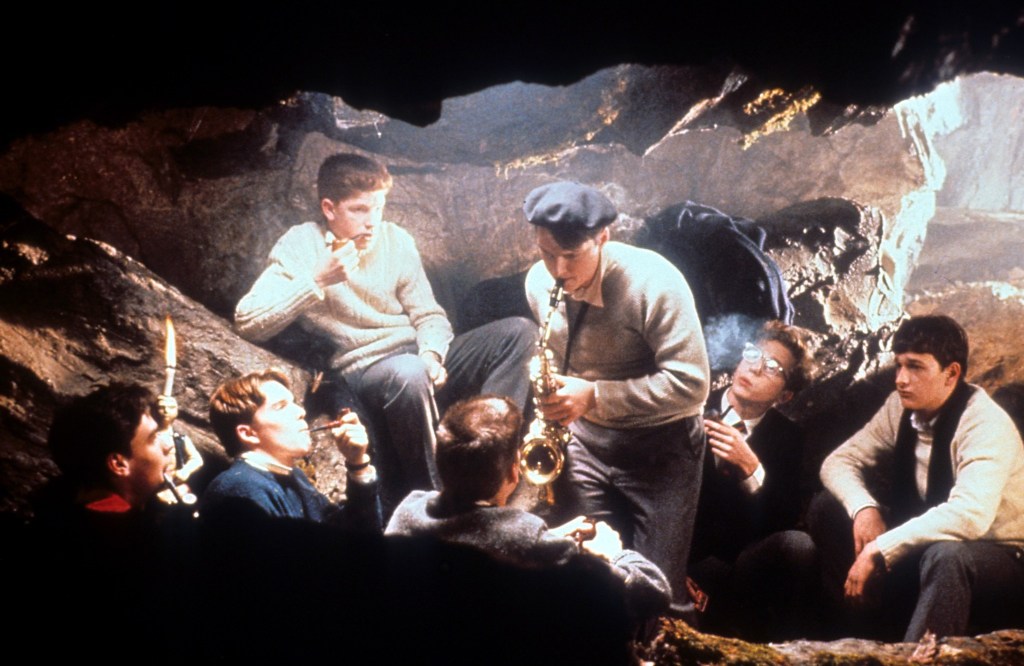
In contrast, everything outside the prep school is associated with warmer lighting, through fire or lamps, notably during the secret meetings in the cave. It is interesting to note that even the darkness of the night does not feel frightening. Instead, it becomes the perfect setting for soft music and singing, allowing students to express themselves and have fun.
Silence has a double meaning in the movie. It represents domination during teachers’ speeches or arguments with parents, but at night, it becomes an invitation to simply exist while everyone else is sleeping.
To be free in the face of the present, or enslaved by the future?
Talking about the characters, at the beginning, the movie shows us obedient and submissive students. The actors’ performances portray calm students, with low and slow-pitched voices and neutral facial expressions in class. Their futures seem clear and planned, but « Carpe Diem », says Mr. Keating. « Seize the day »: a voice is now asking students to live in the present, and each student then questions how to make the most of their own lives. Neil, the main character, discovers his passion for theatre, expressing his enthusiasm through his smile throughout the film. Todd, his friend, is the opposite: he hesitates and lowers his gaze, always speaking quietly, while others, like Charlie, already embody a rebellious figure from the very start. Charlie never stops smiling, acting ironically and being as loud as possible.
Though it sounds easy when Mr. Keating teaches his classes, in reality, freedom is resistance, and resistance is met with oppression. Neil will have to make tragic choices, losing his smile as he faces his hopelessly controlling father. Todd, on the other hand, will finally find the courage to speak up, using a loud voice without his usual trembling, but perhaps too late. Charlie will understand what it costs not to obey, and his usually loud and funny voice will become angry, as he looks seriously at his teachers. Freedom is a journey, but it leads to different endings for every student who has heard the same call.
O Captain! My Captain! by Walt Whitman
Why did Mr. Keating teach such subversive ideas, then? Surely, this was never going to end well in a conservative school. But, in fact, it was never about doing big things. During the first class, in one of the most emblematic scenes, with a wide shot of students filling the screen and Mr. Keating in the centre, he says: « Words and ideas can change the world. » Simple but powerful, the movie shows us that doing something meaningful does not necessarily mean putting ourselves in danger or trying to force a system that is too powerful to be defeated. In truth, it reminds everyone that the first freedom we can have lies in our minds and our ideas, and that extraordinary lives start there, one day at a time. After leaving the prep school, the students will have to claim their place in the world. And so, the movie ends with that one scene: changing the power dynamic, the students stand on their desks, symbols of their education, facing Mr. Keating, who has paid the price for delivering such lessons. They finally understand that freedom is unstoppable once it exists within them.
Dead Poets Society is a movie about freedom, resistance, growth, love, and friendship. Through all of these themes, it encourages people to stop wondering what the world thinks of them and start asking what they think of the world.