
Eya RJIBA | Politics undeniably plays a big role in our daily lives. Political opinions and protests are on the rise and the youth is increasingly learning more and educating themselves on politics. Young people are especially learning from the media they consume and absorb, social media, music, fashion, movies, books and even TV shows. Indeed, it’s less likely nowadays that to develop a political identity by watching a 2-hour debate between two candidates yelling at each other but rather you will scroll on TikTok and agree with the opinions argued in only 30 seconds.This politicization can lead to a growing need for them to know what their role models stand for.
Firstly, art and media have always been used to showcase political opinions. Several works of art demonstrate that politics was not always monopolized by Presidents or governments but also artists who used their voices to bring awareness and to be politically engaged.
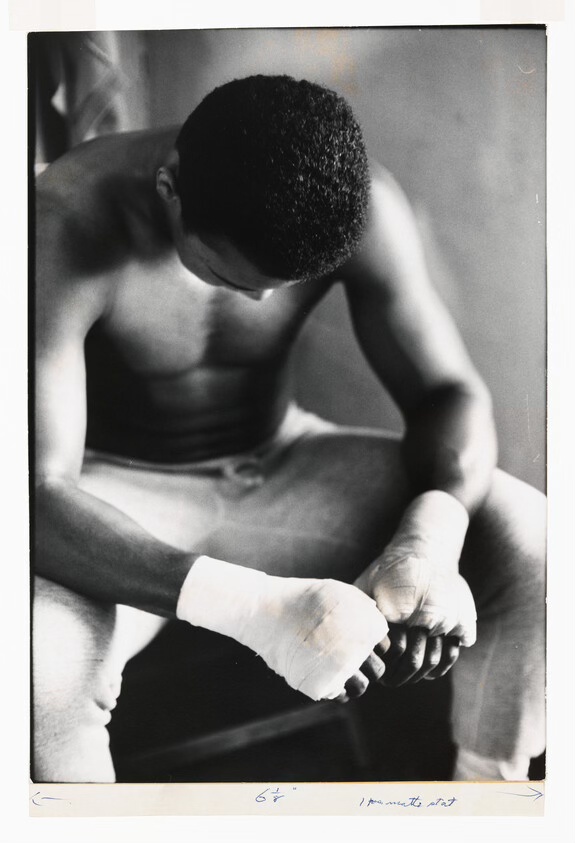
In 1966, the photographer Gordon Parks published a striking photo of Muhammad Ali titled Bandaged hands. The photograph shows the boxer, head down, sitting down almost looking defeated, seemingly refusing to fight. This photo is connected to a specific event, Muhammad Ali was opposed to the war in Vietnam and refused to join the military because of the racism towards Black people present in the United States but also because of his opposition to this war. This political stance made him a controversial public figure in the United States.
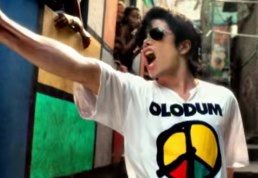
Politics can also be seen through music, for example the iconic song by Michael Jackson They Don’t Care About Us. This song was released in 1996 as the fourth single from his History: Past, Present and Future, Book I album and still resonates and plays in protests today, thirty years later. With lyrics referring to police brutality, racism and state violence, this song was made to transmit a political message to the world. The King of Pop later released on October 3rd 2009, the Brazil-version music video that is different from its original music video that dates back to 1996. This Brazilian version music video reinforced the song’s meaning, shot in Pelourinho (Salvador) and the Santa Marta favela in Rio de Janeiro. The legacy of this song remains and was notably used during the Black Lives Matter protests after the killing of George Floyd by police officers, the song echoing the racism experienced by Black people in the United States. But this track grew beyond its original context and is now played across the globe to highlight people’s protests and fights. Ultimately, songs that are politically charged can be adapted to different people, making one song cross borders and resonate with different struggles.
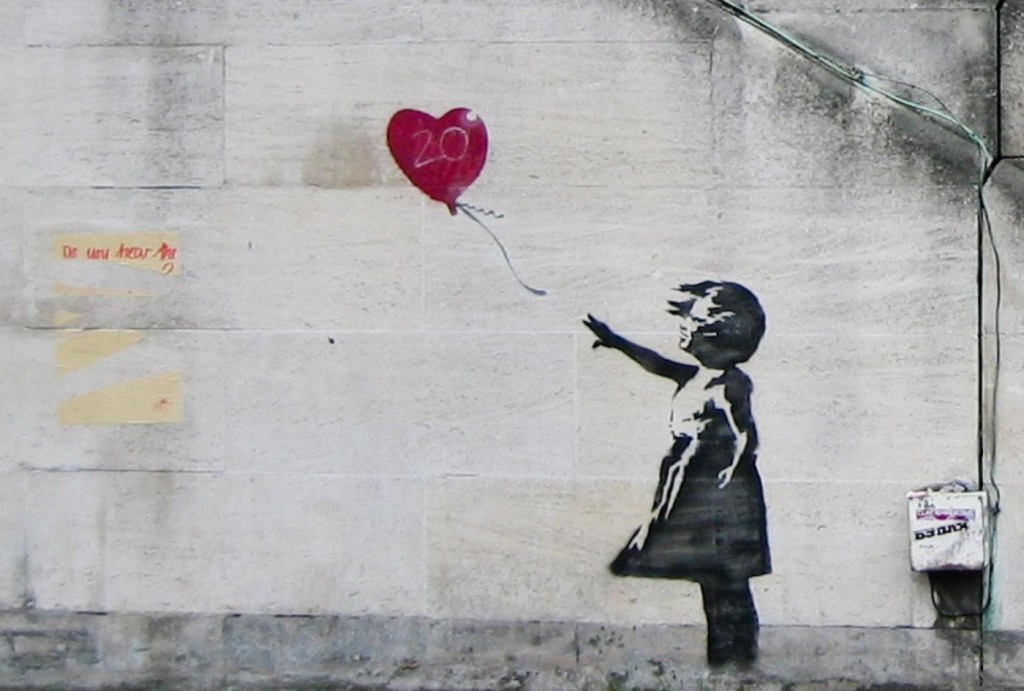
Similarly, the artist Banksy whose identity is hidden has been making political art since the late 1990s. One of his most iconic works of art is Girl with Balloon, first showcased near a shop in Shoreditch around 2002, before appearing along London’s Southbank later that year, this time accompanied by the epitaph “There is Always Hope”. This piece of street art which looks simple in appearance can hold deeper messages. The image is visually minimalistic, a young girl represented in black and white, with her arm extended to a red heart-shaped balloon flying away, with a short phrase written next to her: “There is always hope”. As Banksy is a mysterious artist whose identity is still unknown, he also tends to leave no explanation regarding his art but rather lets the public have their own interpretations. Compared to his other artworks, this one is less explicitly political and can be interpreted in many different ways. But the representation of this child supposedly and accidentally letting go of a balloon can immediately make us think of a fleeting innocence as well as it can evoke different meanings for different people. So a piece of art can be interpreted differently according to our experiences, but then how can we assess if it is truly political if we don’t know the artist’s intention and meaning behind their work.
Can we really assume that a piece of art is political even if it has not been clearly stated ?
Now naturally, we can ask ourselves if supporting an artist, liking their art makes the consumer indirectly adhere to their political beliefs. In our political state of the world, artists are obligated to speak up on certain political topics. Can we truly separate an artist from their art when it comes to human rights matters ?
A recent event particularly illustrates these tensions about politics and artists : the Macklemore and Ed Sheeran tour controversy. This event quickly went viral on social media, after the American rapper Macklemore was removed from the openers of Ed Sheeran’s tour due to his political opinions. Indeed, Macklemore, by his real name Benjamin Haggerty, has always used his music to convey political messages: on LGBTQ rights and particularly on the ongoing genocide in Palestine. After the release of his song Hind’s hall which pays tribute to the young Hind Rajab who was killed by the Israeli military, Macklemore became a voice for pro-palestinian movements. His political positions caused his removal from Ed Sheeran’s tour which sparked a huge wave of backlash towards Ed Sheeran. In response to this, Macklemore announced his own tour, the “Free Palestine tour” in three European cities: Dublin, Paris and London, and the money gathered will be given to organizations for Gaza. In an Instagram post, Macklemore highlighted that « taking a side can cost you” but despite that, he continues to show his support for Palestinian liberation. His statement valued him a wave of positive reactions making his tour sold out. From this situation, we can understand that modern audiences no longer expect artists to be apolitical and wait for a statement on political issues.
But does liking a specific artist’s music make us automatically support his political stances ?
We can take the example of the artist Kanye West who’s often described as one of the most iconic musicians of his generation. Despite his undeniable legacy on music, his political stances across the years have always been problematic. Going from saying that “slavery is a choice” during an appearance on entertainment site TMZ in 2018, to wearing a “White Lives Matter” t-shirt at his Yeezy SZN 9 show in Paris, supposedly discrediting the Black Lives Matter protests and having antisemitic comments among many other controversies. Can we still appreciate a musician’s art after controversies that go against our own morals ?
One question remains though, can artists be truly politically engaged without performing it or doing it to please and attract a certain target audience ? How can we know that an artist’s intention is to raise awareness about a particular issue and not attract more fans ? After all, most artists are millionaires and could act selfishly.
Recently, the RnB singer SZA by her real name Solána Rowe, has sparked an online debate due to a simple comment she made under an Instagram post. The famous star commented under a post claiming that the IPhone 17 Pro is worth buying “Children in Congo literally died for this phone. I absolutely hope the zoom was worth it.” Many people sided with the artist, thanking her for drawing attention to human rights abuses in the Democratic Republic of Congo however others claimed that her activism was “performative” and that it was quite “hypocritical” as SZA later uploaded pictures holding the same phone.
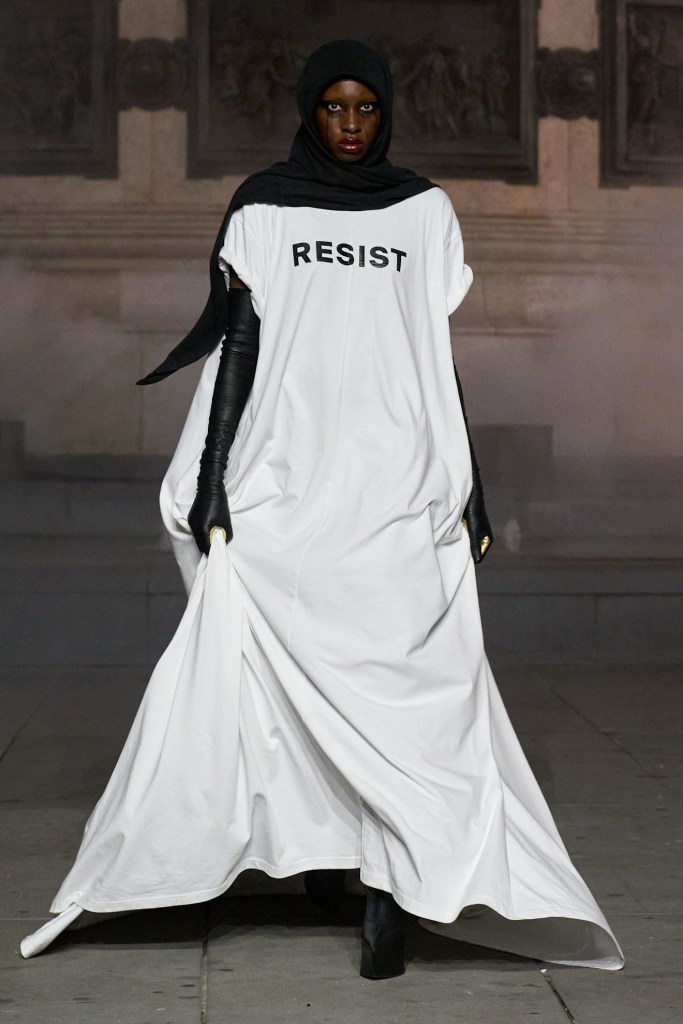
Not only artists can be called “performative” when it comes to activism but also fashion brands The bold designer brand “Matières fécales” created in 2014 by Hannah Rose Dalton and Steven Raj Bhaskaran, recently gained popularity during the Paris fashion week, with their collection entitled “The 99 percent”. The fashion runway took place in Place de la République featuring 99 models of color wearing their creations. Bold looks that call for resistance and show the power of the world’s wealthiest percentile have caused debate on social media. Users have argued once again the hypocrisy of denouncing unethical billionaires and showcasing political messages while their show is taking place during Paris fashion week highlighting their privilege and wealth. The designers were clearly aware of the hypocrisy and responded with “This is an opportunity to showcase that our culture, our voices, our perspective are just as important as all of those who are normally championed in the luxury space” (quote from Bhaskaran). The event was also opened to the public and a portion of the sales will be given to an organization. So can political activism be truthful and not used for aesthetic purposes but just for the cause itself?
So is art truly political? There is no clear-cut answer however art can certainly be crafted to convey political messages that can polarize people. It can also be deemed as performative if actions do not match statements. It will be praised as well if it is seen as genuine. Art is truly all about subjectivity and the eye of the beholder but can also carry a true message whether you recognize it or not.
Sources:
https://banksyexplained.com/issue/girl-with-balloon-graffiti-legend
https://www.revolt.tv/article/michael-jackson-they-dont-care-about-us-explained
https://www.bbc.com/news/articles/c9vl1pn70ddo
https://wwd.com/runway/spring-2027/paris/matieres-fecales/review

